
Across the fertile plains of Faranah, a new agricultural dynamic is taking root. Led by Rio Tinto through its Regional Economic Development Strategy, this initiative aimed to strengthen the capacities of 500 market-garden producers from 50 farmer groups in Faranah Centre, Dantilia, Tiro, Nialia and Tindo, along the Simandou corridor.
In collaboration with EnviroAfrica and the Ministry of Agriculture, through the Prefectural Directorate of Agriculture and Livestock (DPAE) of Faranah, training sessions were organised in May and October of 2025 in the urban commune of Faranah and the rural commune of Dantilia. These sessions focused on strengthening beneficiaries’ knowledge, skills and techniques in building agricultural resilience to climate change.
More specifically, participants were trained in good agricultural practices, nursery establishment, transplanting, organic fertilisation, and greenhouse management.
Concrete support for producers
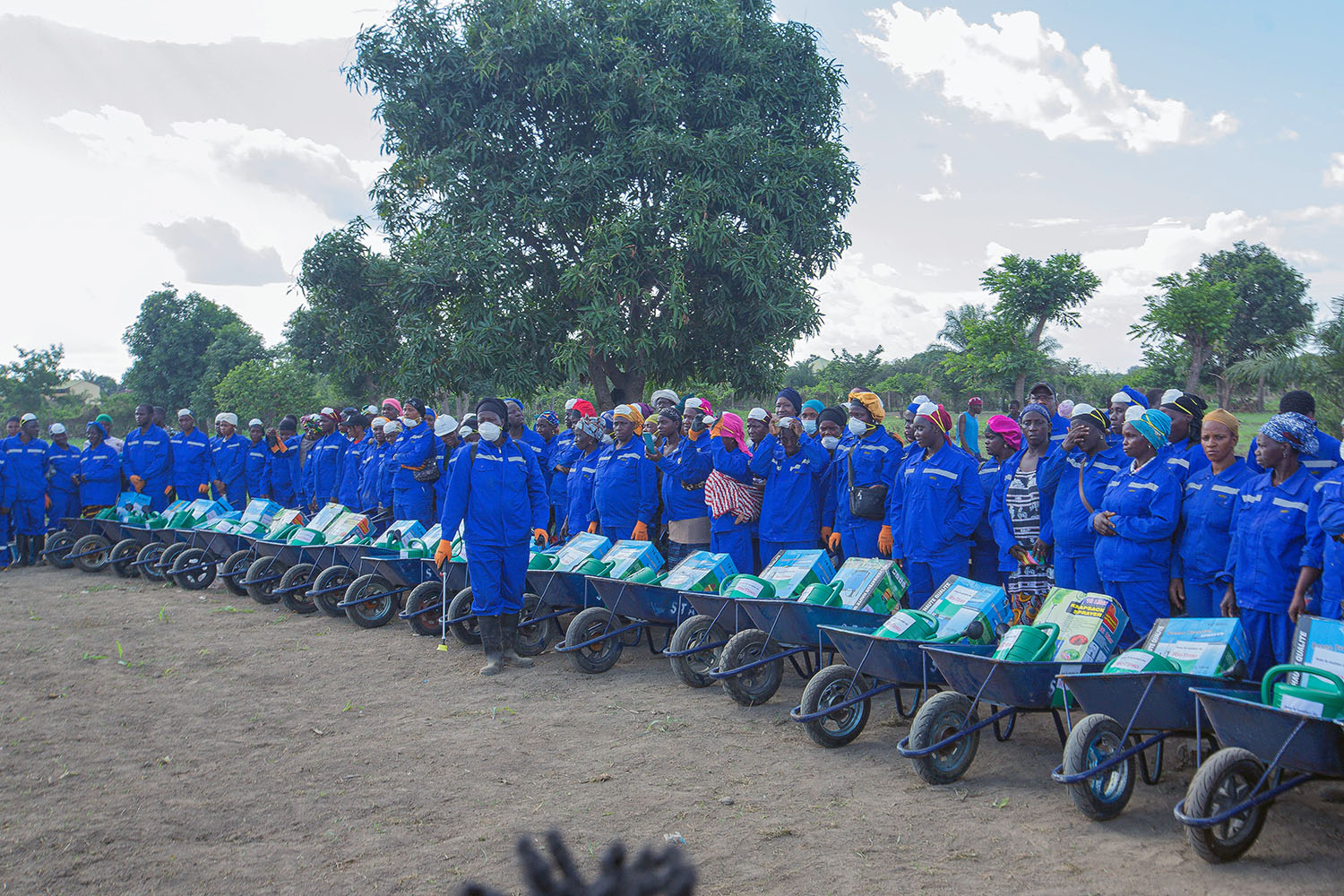
Each farmer group received personal protective equipment, as well as small tools and adapted agricultural inputs, including watering cans, wheelbarrows, dibbers, boots, gloves, face masks and seeds. This material support is essential to applying the knowledge acquired and contributing to improved yields.
This initiative is part of the development programme along the 650 km railway corridor linking Beyla to Forécariah. Far more than a logistics route, this corridor is a lever of transformation for the communities it crosses.
Dantilia: Agroforestry at the heart of communities
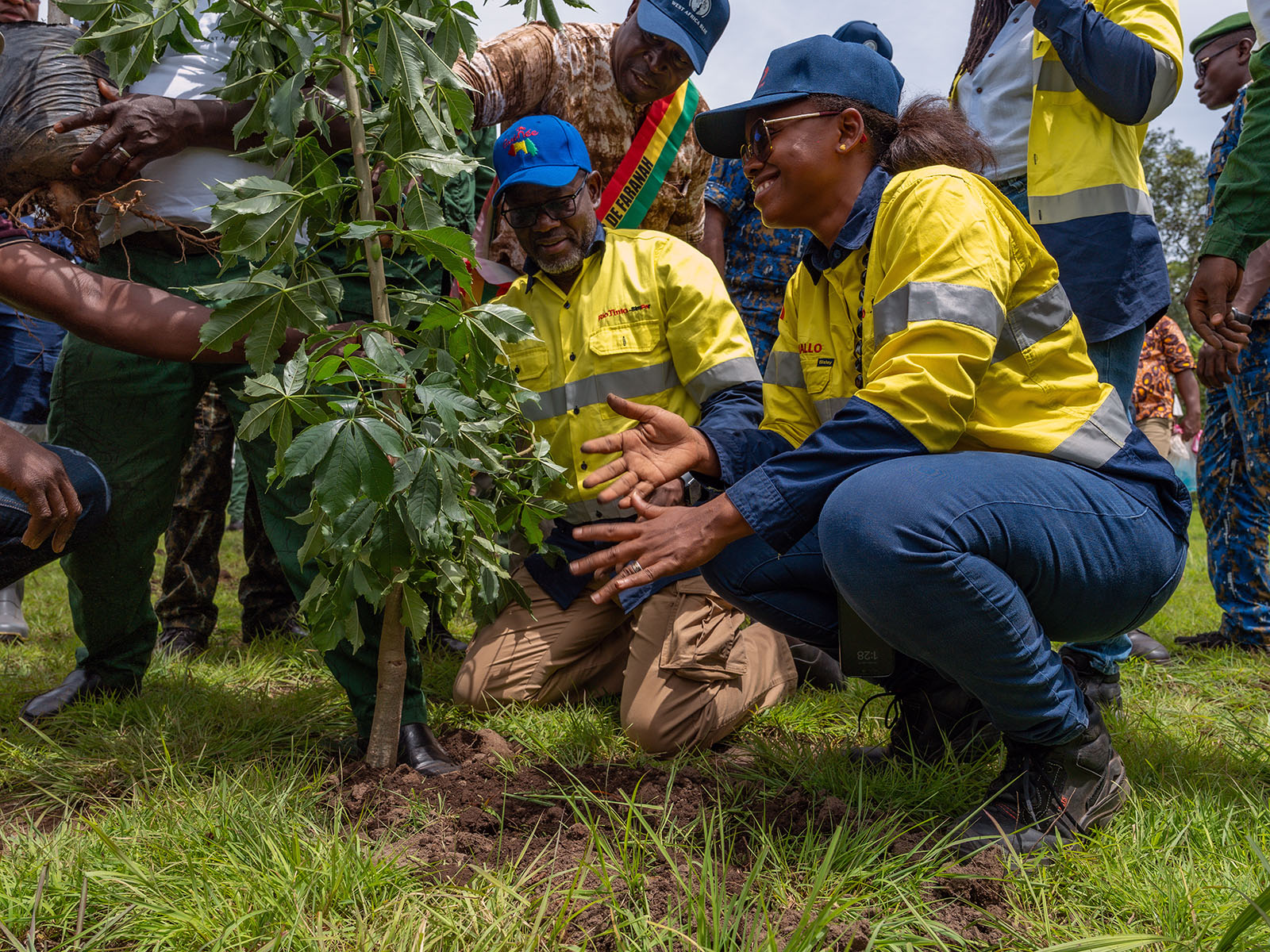
The Dantilia nursery aims to become a key reference in the region. In 2025, its role expanded as it was transformed into an integrated centre dedicated to training, tree seedling production and the promotion of agroforestry in support of local communities.
Funded by Rio Tinto through the Regional Economic Development & Strategy (REDS) department and managed by EnviroAfrica, this one-hectare community and commercial nursery, with a production capacity of 100,000 tree seedlings, serves as a strategic pilot site for national reforestation and forest landscape restoration.
The results achieved are already significant: 15,550 seedlings of local species produced between 2024 and 2025, over 13,000 planted between 13 July and 13 August 2025, as part of a large-scale community reforestation campaign that enabled the restoration of 12 hectares of degraded riverbanks along the Tinterba River.
Today, the nursery employs nine people from the local community and offers targeted training programmes to meet local needs: a market-gardening training session in May 2025, benefiting 50 women producers, and a training on tree seedling production and nursery management in November–December 2025, aimed at 27 nursery operators and agroforestry stakeholders. It is establishing itself as a centre of excellence, combining commercial production, hands-on training and environmental conservation at the heart of the Faranah region.
Through the Dantilia nursery, Rio Tinto reaffirms its commitment to inclusive, sustainable development firmly anchored in local realities.
Tangible results
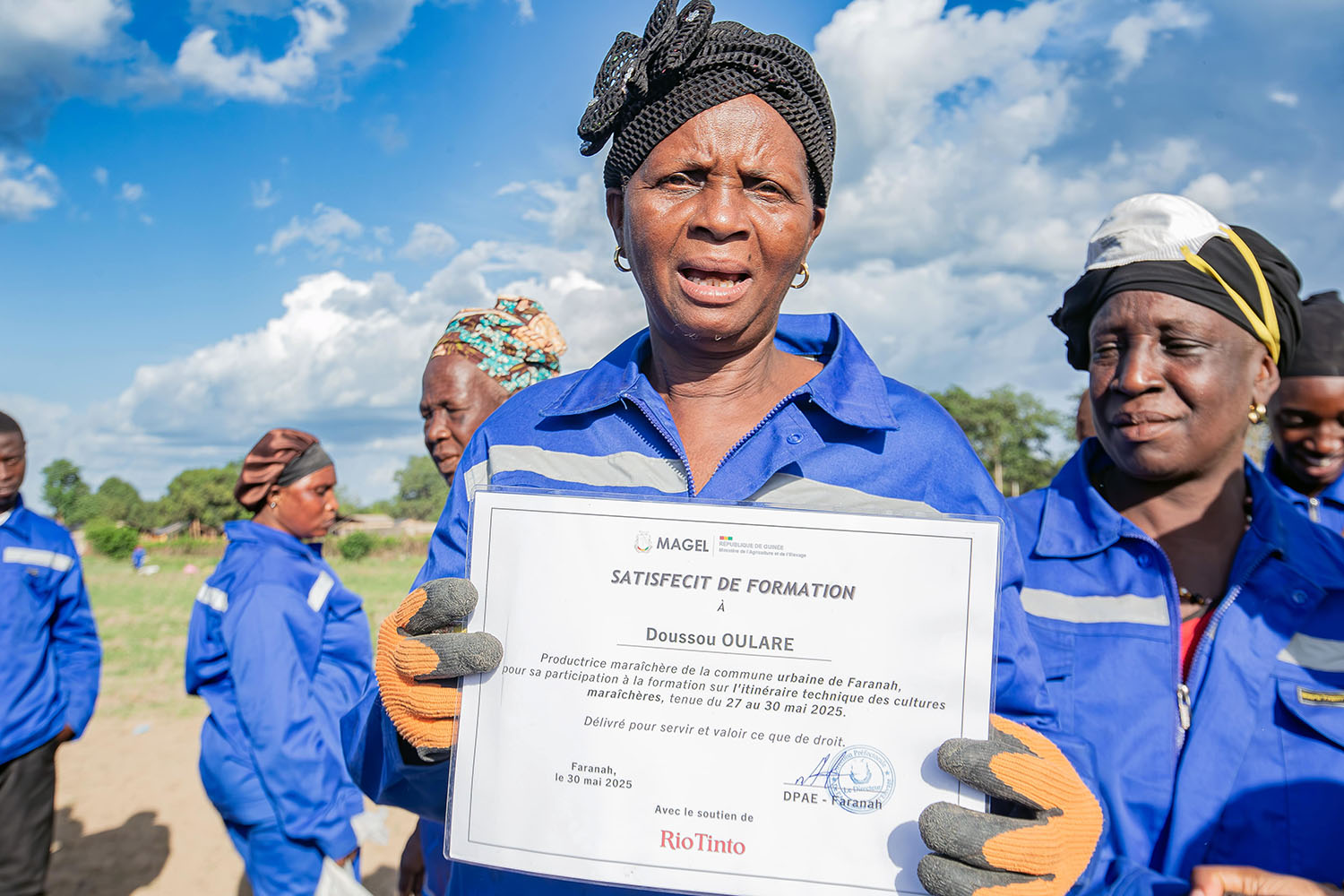
- 515 producers from 53 farmer groups trained in market-gardening techniques and agroforestry
- 77 participants introduced to greenhouse establishment
- 50 farmer groups equipped with personal protective equipment and small agricultural tools
- Improved understanding of agricultural practices, climate challenges and biodiversity issues
The lessons learned from this initiative will help inform and ensure more effective and sustainable implementation of future projects along the railway corridor.